
NextTech Insights
Security-first playbooks for Web3 + AI + modern engineering.
Short, practical, copy-pasteable.
Why NextTech Insights
Most security and SEO advice is either a vague list of best practices or a vendor pitch. NextTech Insights takes a different route: every guide starts from primary sources such as official docs, specs, and security advisories, and ends with steps you can paste into a pull request, a runbook, or a pre-signing routine.
We write for small teams that ship without a dedicated security engineer or SEO specialist. That means fewer theories and more decisions: what to check first, what to block in CI, what to log, and when a warning in Search Console is actually worth your time.
The site is published by DigitalCraft, an independent studio based in Tokyo. Nothing here is financial advice. When a spec or advisory changes, we update the article and show the revision date.
Built for people who
- • Run a Next.js app on Vercel and own its security patches
- • Ship RAG or LLM features and need them to stay accurate and affordable
- • Manage a DAO treasury, multisig, or personal self-custody wallet
- • Launched a content site and are stuck on “not indexed”
Topic guides
Each guide is a curated reading path, not a tag dump. Pick the problem you are dealing with today.
Next.js security
Patch CVEs quickly, roll out security headers and CSP, lock down Server Actions, and keep dependencies and GitHub Actions from becoming an attack surface.
Open guide →
AI development: RAG and LLM ops
Retrieval quality and evals, cost ceilings, rate limits, audit logs, and prompt-injection defenses for LLM features in production.
Open guide →
Web3 wallet safety
Read signing prompts, audit and revoke token approvals, understand Permit2, and set up a Safe multisig without blind signing.
Open guide →
Google indexing and Search Console
Work out whether a page is stuck at discovery, crawling, or indexing, and fix canonical and hreflang signals on multilingual Next.js sites.
Open guide →
Start here
GSC setup (Next.js + Vercel)
Verify, submit a sitemap, and clear the most common indexing blockers.
Read →
Safe airdrop claim checklist
Avoid signing scams and approvals that can be abused later.
Read →
Permit2 (2026)
What changed about approvals, and how to use it safely.
Read →
Next.js security update playbook
Patch fast, reduce blast radius, and keep evidence for incident follow-ups.
Read →
Featured
Permit2 explained (Web3): why approvals changed and how to use it safely (checklist)
Permit2 changed how token approvals are handled in many EVM dApps. Learn what it is, where the risk concentrates, what to check on signing screens, and a practical routine to revoke unused permissions.
Latest Articles

Next.js SSRF defense checklist: securing Route Handlers and Server Actions (2026)
A practical security checklist for preventing Server-Side Request Forgery (SSRF) in Next.js: restrict protocols, validate resolved IP addresses against private networks, handle DNS rebinding, and inspect redirects.
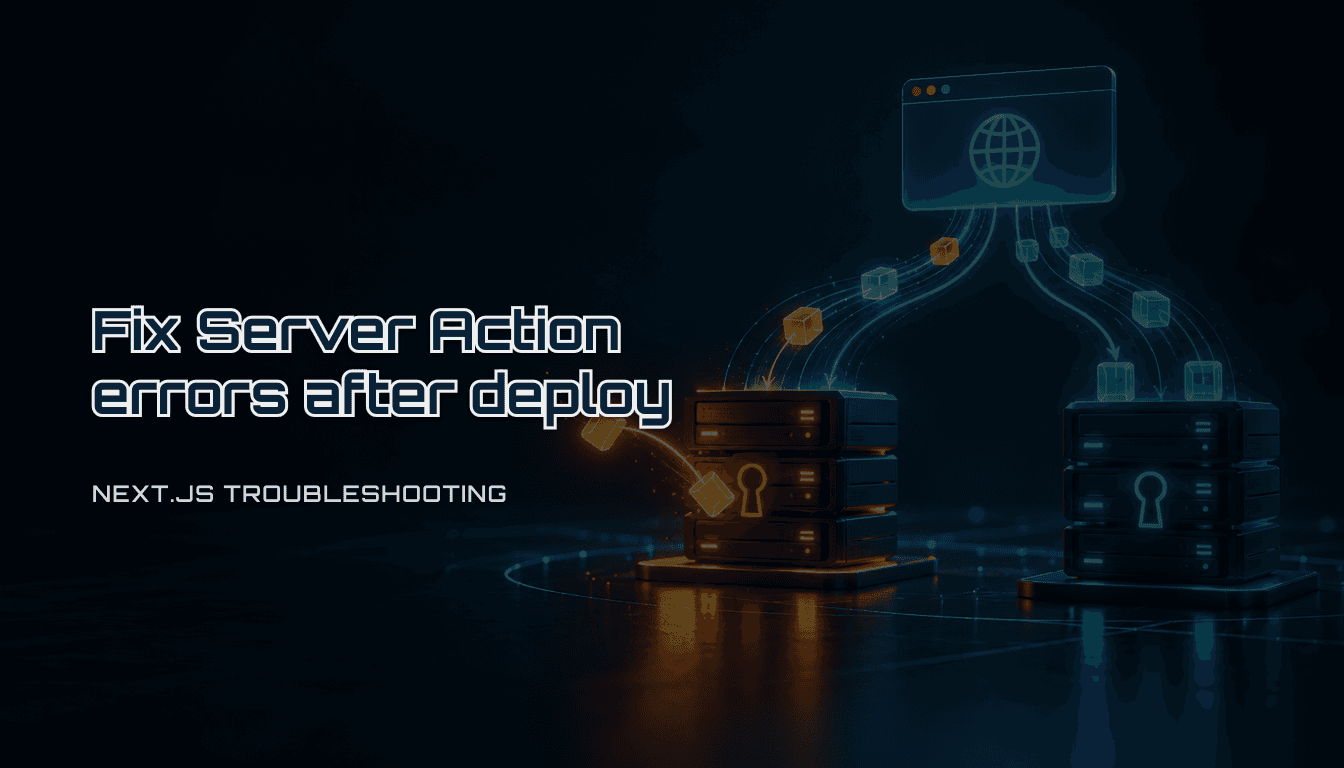
Fix "Failed to find Server Action" in Next.js after a deploy (2026)
Why Next.js throws "Failed to find Server Action ... older or newer deployment": stale browser tabs, rolling deploys, and mismatched encryption keys. Includes a diagnostic table, deploymentId and NEXT_SERVER_ACTIONS_ENCRYPTION_KEY config, and a verification routine.
Next.js error digest in production: find the real server error with onRequestError (2026)
Your production Next.js page shows "An error occurred in the Server Components render" and a digest number. Here is how to trace the digest to the original server error with instrumentation.ts and onRequestError, based on a tested Next.js 15 build.

MCP server security checklist: review before you install or build
A practical MCP server security checklist covering tool poisoning, changing definitions, provenance, least privilege, OAuth audience validation, stdio execution, approvals, logs, and indirect prompt injection.

Safe multisig setup checklist: owners, threshold, and the blind-signing gap (2026)
A practical checklist for setting up a Safe (Safe{Wallet}) multisig for a team or treasury. Configure owners and threshold correctly, and close the blind-signing gap that let attackers drain $1.5B from Bybit through a legitimate-looking Safe transaction.

Next.js Server Actions security checklist: auth, validation, and CSRF (2026)
A practical checklist for securing Next.js Server Actions: treat each action as a public POST endpoint, re-check auth and ownership, validate input, limit return values, and configure allowedOrigins correctly.